When a global manufacturer or corporate site selector evaluates a community for a multi-million-dollar facility relocation, their investigation doesn’t begin with a physical site tour. It starts on a search engine.
For state-wide alliances, regional development groups, and municipal governments, a website is no longer just a digital business card. It is an active economic engine and the virtual front door to your community’s business ecosystem.
Building a website that effectively converts anonymous corporate traffic into active development inquiries requires moving beyond basic decorative templates. It demands an intentional, custom-engineered digital experience designed specifically to bridge the gap between complex regional asset data and a frictionless user experience.
The Digital Hurdle for Site Selectors
Corporate executives and site selectors operate under strict timelines and carry exhaustive checklists. They look at vast sets of quantitative infrastructure and regional data to rapidly eliminate communities that fail to meet their threshold criteria.
The primary challenge of modern economic development web design is preventing data fatigue. A platform must host complex, high-density specifications—such as master land-use concepts, utility capacities, civilian labor shed metrics, and multi-modal logistics networks—while keeping the visual interface intuitive and highly scannable.
If a site selector cannot find your community’s available acreage, transport infrastructure, or workforce demographics within two clicks, they will move on to a competing region.
3 Core Pillars of High-Performing Economic Development Portals
To turn your web portal into an active asset for business recruitment, your custom development roadmap should focus on three foundational technical pillars:
1. Interactive Infrastructure Mapping
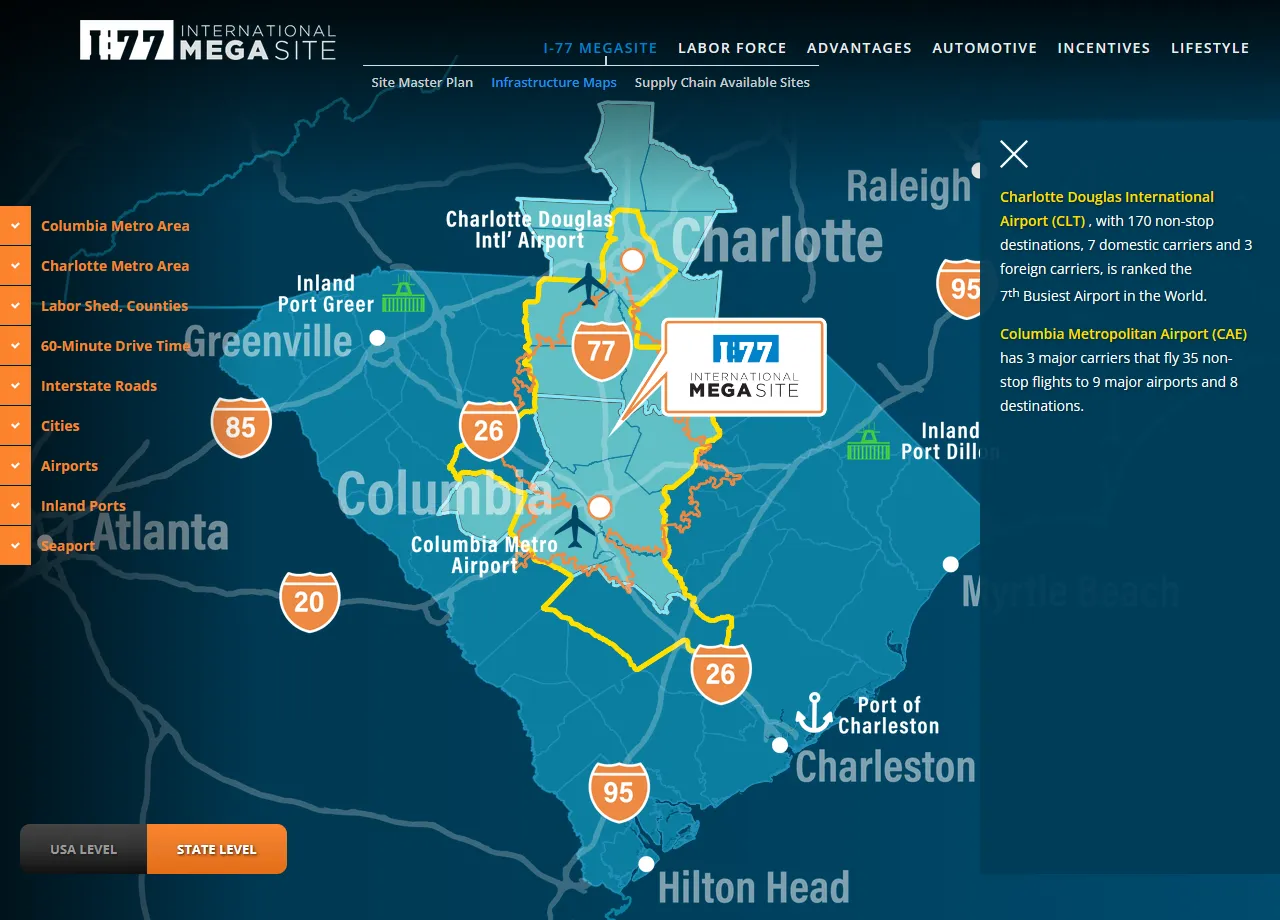
Static, low-resolution PDF maps stall the discovery process. Advanced portals leverage interactive geographic tracking and clean GIS spatial layers. Your platform must instantly visualize macro and micro logistics reach, including:
- Direct highway connectivity and interstate exit access.
- Class I rail corridors and commercial freight hubs.
- Proximity to major deep-water ports and inland logistics transfer facilities.
By allowing users to dynamically filter infrastructure tracks on a responsive map, you help global manufacturers immediately envision how seamlessly they can supply nationwide markets from your local site.
2. Data Visualizations Over Text Blocks
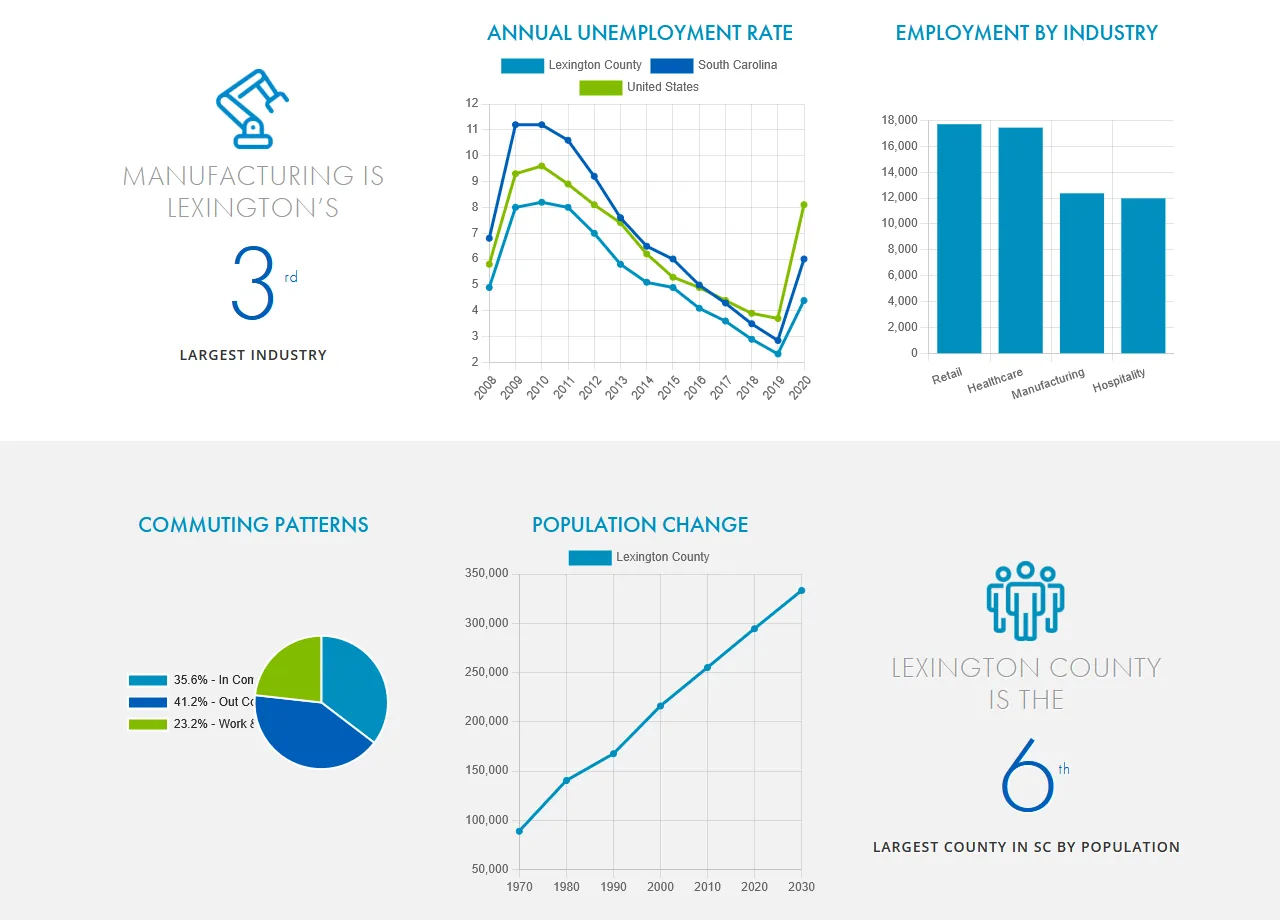
Raw spreadsheets and endless paragraphs of text obscure critical advantages. High-converting portals transform dense regional demographics into intuitive visual infographics. By frontloading critical labor metrics—such as the active civilian labor pool within a 60-minute drive radius, regional population growth trends, and localized educational attainment rates—you give decision-makers immediate access to the demographic proof points required for major investments.
3. Clear Intentional Pathways for Diverse Audiences
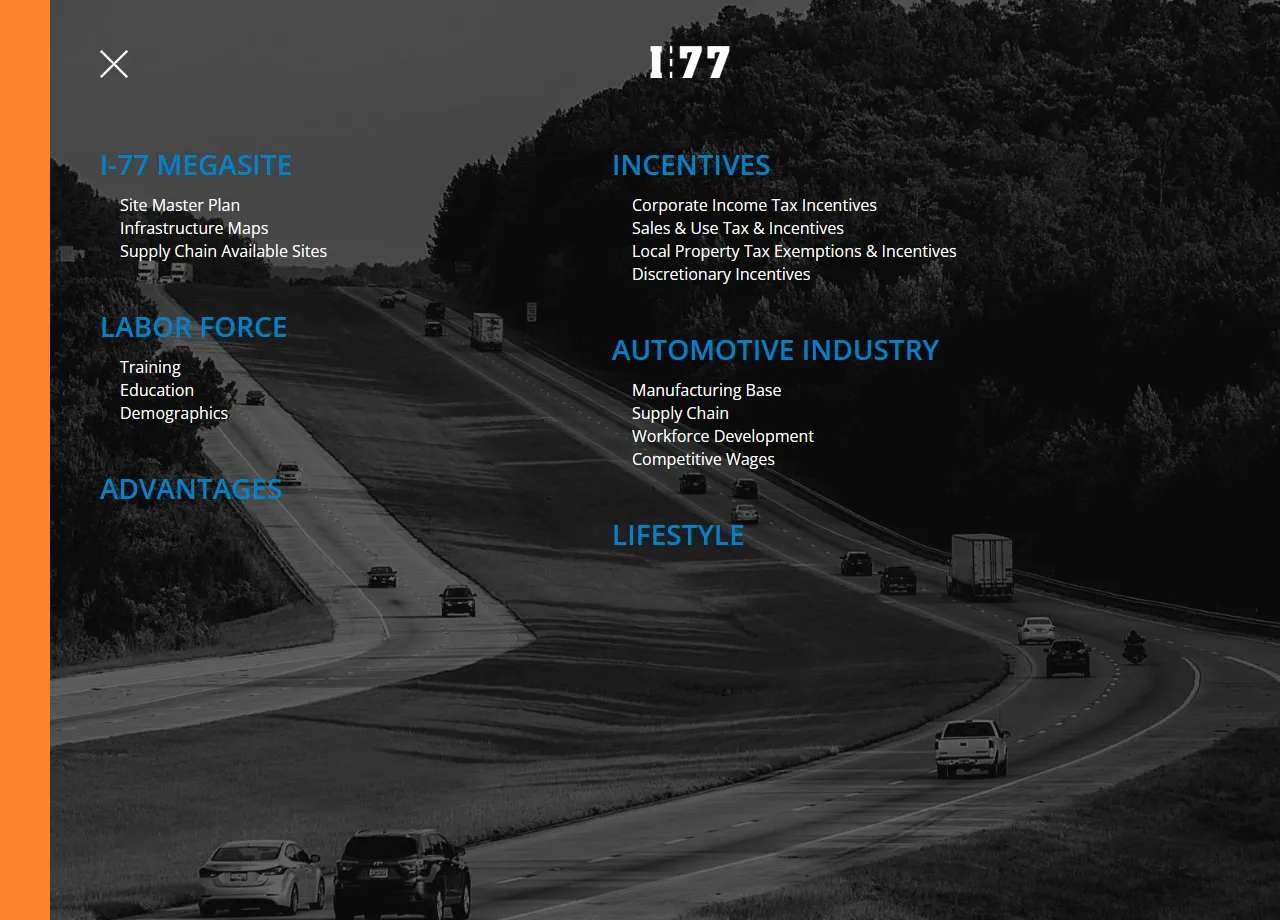
A municipal or regional web hub must serve a dual audience without splitting its core messaging. Local citizens looking for public services require different design considerations than international site selectors analyzing global destining viability. By engineering a custom, single-click navigation structure, you can guide corporate executives seamlessly toward your site selection criteria while keeping local civic resources accessible on a separate track.
The Long-Term Value of Custom Code
While generic, off-the-shelf templates are appealing for rapid deployment, they often load massive code bloat that slows down page performance. Slow load times frustrate enterprise users and harm your search engine rankings.
Engineering an economic development platform with custom WordPress code ensures your site remains lightweight, secure, and fully indexable by search engine crawlers. Custom code allows for advanced schema markup injections, clean database queries, and optimized meta structures. This guarantees that when a corporation searches for an industrial asset in your region, your community ranks at the top of the search results.
Connecting Data with Community Identity
Ultimately, data alone does not win a relocation project. The highest-performing economic development platforms seamlessly weave technical specifications with a compelling regional narrative. Highlighting local research anchors, technical college training partnerships, and lifestyle incentives—such as local cultural hubs, healthcare networks, and recreational amenities—proves to corporate leadership that your community offers an exceptional environment where executive talent and workforce can thrive long-term.
Investing in a custom-designed web infrastructure ensures your region is prepared to capture modern corporate interest, demonstrate its unique advantages, and drive sustained economic growth.
Partnering for Long-Term Regional Growth
Your web presence is far more than a static informational archive—it is the single most visible marketing asset your region owns. When structured correctly around intuitive user data, advanced GIS mapping integrations, and a fast, custom code foundation, it becomes an active economic engine capable of converting high-level site selector interest into tangible local investments.
At Elephant Ear Design, we combine decades of deep industry experience with custom development to help communities stand out on the global stage. We have engineered tailored digital platforms for prominent regional drivers across the state, including the extensive property data infrastructure for the I-77 International Megasite Web Design Case Study, and custom-tailored economic opportunity frameworks for the Lexington County Department of Economic Development. We also design highly accessible community systems, as seen in our civic work for Chester County Government.
Operating state-wide from our base in the Midlands (including Columbia, Lexington, and West Columbia), we partner with regional growth alliances and municipal leaders across all of South Carolina’s major economic corridors. From the industrial expansion sectors of the Upstate (Greenville, Spartanburg, Rock Hill) to the enterprise distribution logistics hubs of the Lowcountry (Charleston, Mount Pleasant, North Charleston) and the commercial networks of the Grand Strand, our platforms are engineered to scale seamlessly and drive global business recruitment.